부여 반교마을
Info only · no booking hereAbout
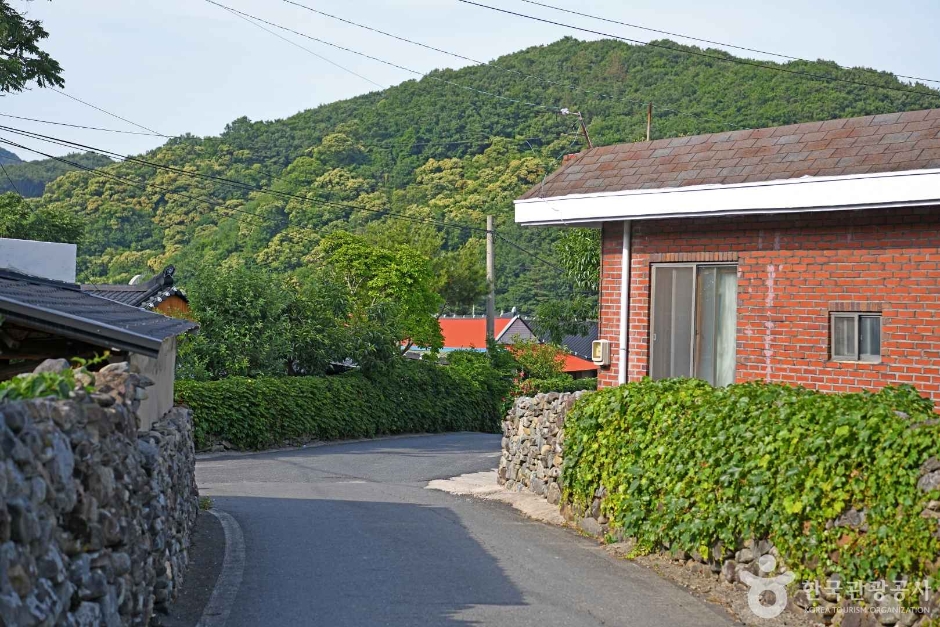
Bangyo Village is located on the eastern foothills of Amisan Mountain, with Bangyocheon Stream flowing in front of the village. It was called "Pangyo" because of the plank bridge (neol-dari) used to cross the stream, and the name later settled into the current "Bangyo." The village was formed when the Naju Jeong clan settled here, and it preserves the sentiments and beauty of a traditional rural community. In the old days, the village had many pear trees, so it was called "Baenamugol" (Pear Tree Valley), and it was also referred to as "Dopakgol" due to the many rocks on Amisan Mountain. The entire village is lined with long stone walls. The "Buyeo Bangyo Village Old Walls," designated as a National Registered Cultural Heritage, are a representative example of stone-wall heritage in the Chungcheong region. These walls were built using natural, unhewn stones from Amisan Mountain, easily obtainable in the area, and feature a stable form with a wide base of about 90cm that gradually narrows toward the top. As windbreak walls designed to shield against winds blowing down from the mountain, they are taller than those of other villages. The village is home to the Jayeon Buyeo Youth Hostel, as well as Hyuhudang, where former Cultural Heritage Administration head Yoo Hong-joon is known to stay. Nearby attractions include Suribawi Rock, Mansusan Mountain, and Muryangsa Temple, in addition to Amisan Mountain.
- Hours
- Always open상시 개방
- Closed
- Open year-round연중무휴
- Parking
- possible가능
- Contact
- 041-830-2330
Machine-translated from Korean. It may contain errors — the Korean original is kept next to short entries.