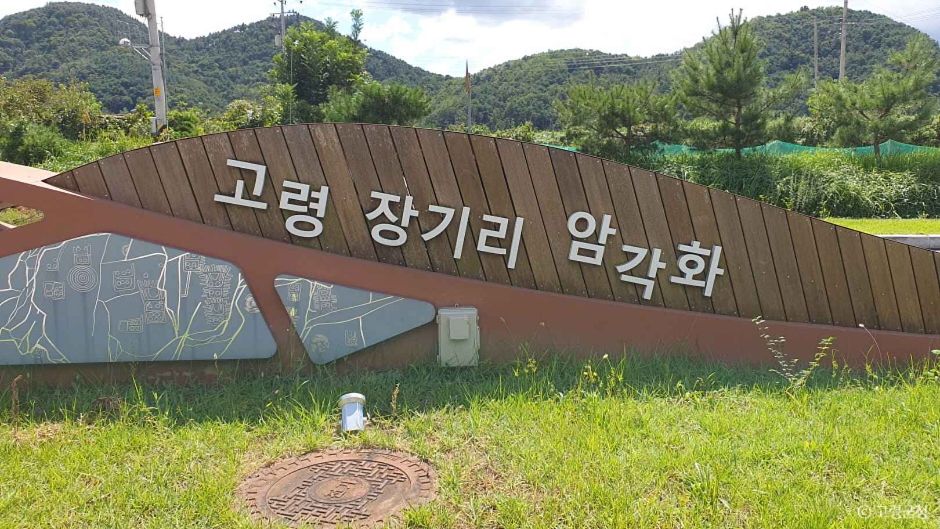
고령 장기리 암각화
Info only · no booking hereAbout
Yangjeon-dong Petroglyphs are carvings on a rectangular rock face 3 meters high and 5.5 meters wide, discovered in 1971. Petroglyphs are images that vividly express the beliefs and life of prehistoric times, primarily shamanistic content praying for abundant fertility, carved onto rocks or sacred sites. The Yangjeon-dong Petroglyphs feature concentric circle patterns, cross patterns, and mask-shaped (mask-type) figures. The three-layered concentric circles, totaling four, symbolize the sun and moon; the cross shapes are presumed to mark the living sphere of tribal society; and the mask forms, totaling 17, take the shape of human faces. The Yangjeon-dong Petroglyph site is presumed to have been a place used for agricultural rites or ceremonies by the residents of that era, and the various patterns carved here are regarded as valuable material for the study of Korea's prehistoric culture. Additionally, given that petroglyphs are found at Alteo in Goryeong, traces of the egg-birth narratives (卵生說話) found in works like the *Samguk Yusa* (三國遺事) can be identified, and a hypothesis has emerged suggesting that the center of the six Gaya states was not Gimhae but Goryeong.
- Contact
- 054-654-2201
Machine-translated from Korean. It may contain errors — the Korean original is kept next to short entries.